
There’s a reason this casserole earned its name—it delivers the kind of restaurant-quality result that feels almost impossible to achieve in a home kitchen. Million Dollar Baked Spaghetti Casserole layers al dente spaghetti tossed in marinara with a silky three-cheese filling (cottage cheese, cream cheese, and sour cream), then tops it all with a deeply browned meat sauce and golden melted mozzarella. The texture contrast is what makes it exceptional: creamy middle, tender pasta, robust sauce, and that final glossy cheese layer that ties everything together.
This is an 85-minute project (40 minutes active prep, 45 minutes baking) that feeds 12—making it ideal for holiday spreads or weeknight dinners when you need to serve a crowd without last-minute stress. Because the whole casserole can be assembled hours ahead and refrigerated, you’re free to handle other dishes or simply rest until it’s time to slide it into the oven.
The genius lies in one strategic timing detail: the final 3 cups of mozzarella topping goes on only during the last 20 minutes of baking. This prevents the cheese from overcooking or separating, ensuring it melts into a perfect golden finish while the casserole beneath heats through evenly. That single move transforms good into unmissable.
Key Ingredients & Why Each One Matters
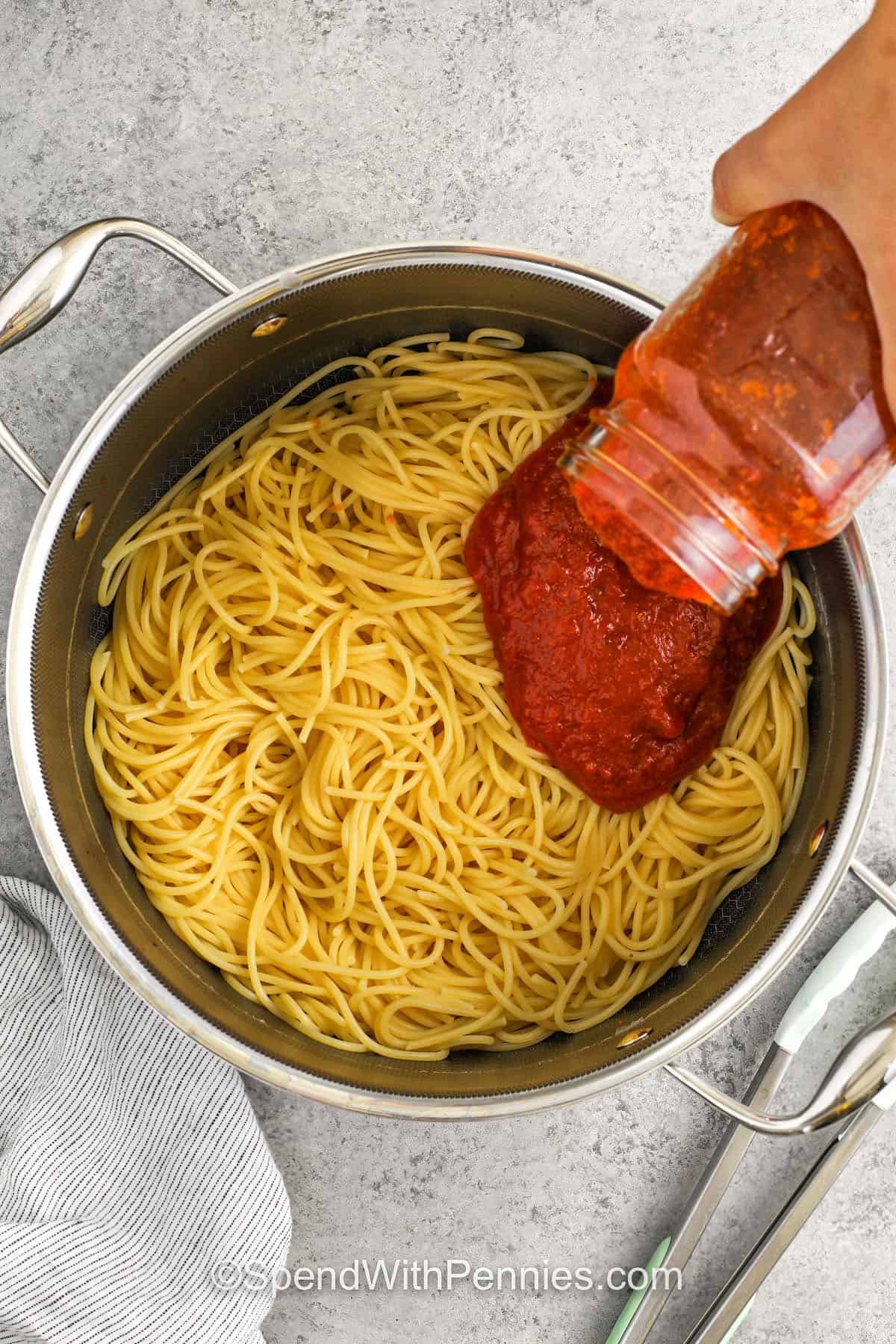
Spaghetti: Cook it to al dente—just tender enough to bite through—so it holds its shape during the 45-minute bake without turning mushy. The slight firmness catches and clings to the sauces, creating those satisfying pockets of flavor in every forkful.
Italian Sausage, Ground Beef, or Ground Turkey: This is your protein base and builds the savory backbone of the meat sauce. Brown it thoroughly until no pink remains so the fat renders out and the flavors concentrate; feel free to drain excess fat after cooking to control richness.
Yellow Onion: Chopped onion softens as it cooks alongside the meat, sweetening the sauce and adding body without overpowering the Italian seasonings. It’s the quiet backbone that rounds out the garlic and herbs.
Garlic: Minced fresh garlic releases its pungent, aromatic oils when it hits the hot skillet with the meat, creating depth that jarred sauce alone cannot achieve. Six cloves gives you assertive flavor without turning bitter or harsh.
Marinara Sauce: Divided between the pasta and the meat mixture, this jarred sauce is your time-saver and ensures consistent flavor throughout. Use either marinara or spaghetti sauce—both work beautifully here—and don’t skip spreading it on the cooked pasta; it prevents drying during the bake.
Italian Seasoning: Split between the meat sauce and the cheese filling, this blend of dried herbs (oregano, basil, thyme) ties the whole casserole together and keeps the flavor profile cohesive.
Cottage Cheese or Ricotta Cheese: This mild, creamy base binds the filling and keeps the casserole tender. Use whichever you prefer; both deliver the same moisture-locking effect.
Cream Cheese: Use room-temperature cream cheese so it blends smoothly into the filling without lumps. Cold cream cheese will seize up during mixing and leave grainy pockets throughout the casserole.
Sour Cream: This tangy addition lightens the filling and adds a subtle richness that balances the creaminess of the cheeses and meat sauce.
Mozzarella Cheese: Shredded mozzarella appears twice—1 cup mixed into the filling for creaminess, and 2 cups scattered on top during the final 20 minutes of baking for that gorgeous golden-brown finish.
Fresh Parsley and Parmesan Cheese: These are optional garnish ingredients that add color, freshness, and a salty edge right before serving.
Essential Kitchen Tools You Will Need
9×13-inch baking dish: This exact size ensures even cooking and proper layering depth; smaller dishes will overflow.
Large pot: For boiling salted water and cooking pasta to al dente.
Large skillet: For browning the meat, onion, and garlic while draining excess fat.
Medium mixing bowl and hand mixer: For blending the cheese filling smoothly without lumps.
Step-by-Step Instructions
Before you start, position an oven rack in the center and preheat your oven to 350°F. Grease a 9×13-inch baking dish and set it nearby—you’ll be layering quickly once the components are ready.
1. Cook the Pasta:
Bring a large pot of salted water to a boil, then add the spaghetti and cook according to package directions until al dente. Drain the pasta thoroughly and return it to the pot. Pour one 24-ounce jar of marinara sauce over the hot pasta and toss to coat every strand evenly. This sauce layer prevents the pasta from drying out during baking and seasons it from the inside. Set the pot aside.
2. Brown the Meat and Build the Sauce:
In a large skillet over medium-high heat, combine the Italian sausage (casing removed), chopped onion, and minced garlic. Cook, stirring occasionally, until no pink remains in the meat and the onion has softened, about 8–10 minutes. Drain excess fat from the skillet, then stir in the remaining 24-ounce jar of marinara sauce and 2 teaspoons of Italian seasoning. Let this meat sauce simmer gently while you prepare the cheese layer.
3. Blend the Cheese Filling:
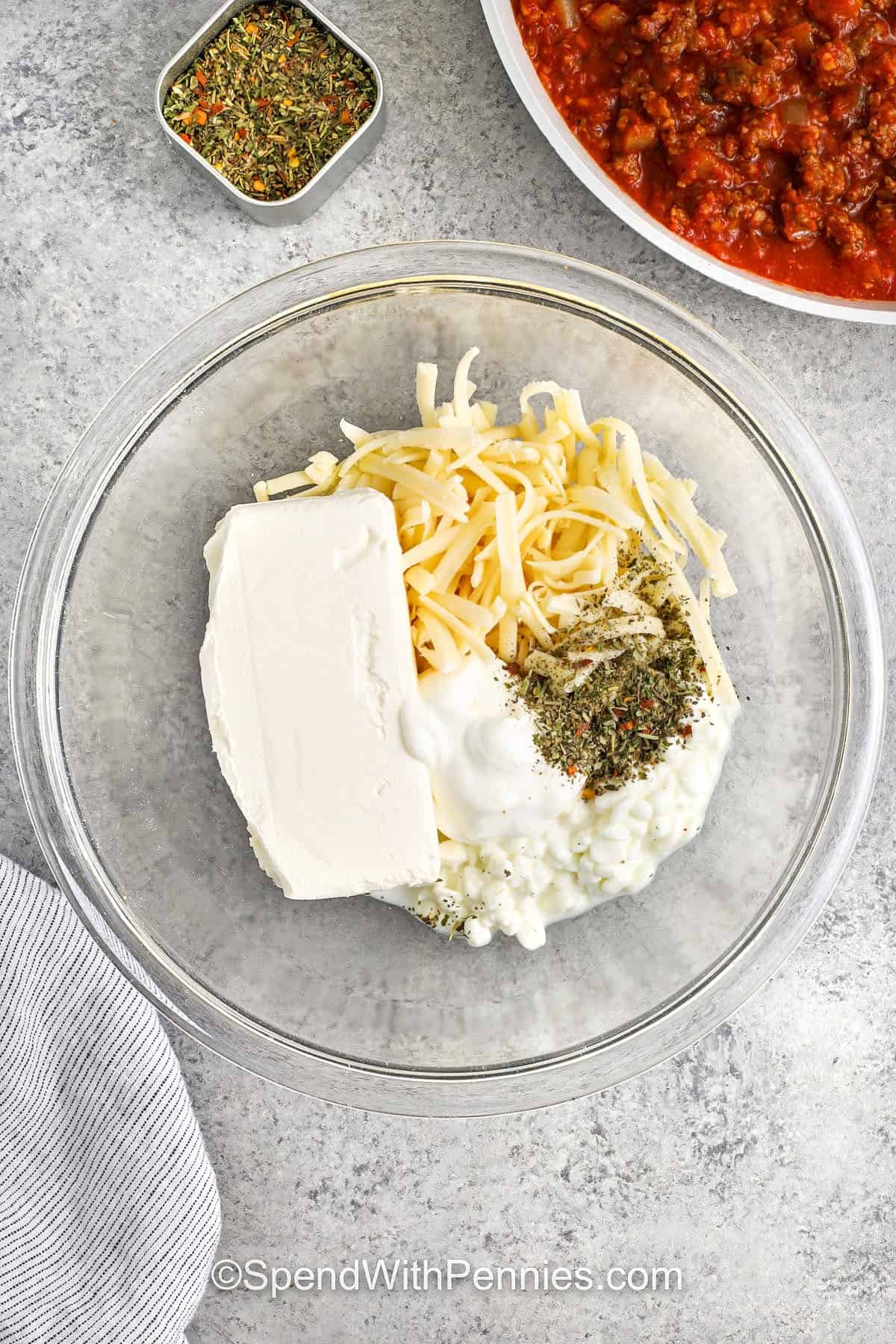
In a medium mixing bowl, combine the cottage cheese (or ricotta), room-temperature cream cheese, sour cream, 1 cup of shredded mozzarella, and 1 teaspoon of Italian seasoning. Using a hand mixer, blend these ingredients until the mixture is smooth and free of lumps. The room-temperature cream cheese is essential here—it incorporates cleanly without creating grainy patches.
4. Layer the Casserole:
Spread half of the sauced spaghetti across the bottom of your prepared baking dish. Dollop and spread the entire cheese mixture evenly over this layer, then top with the remaining spaghetti, pressing gently so the layers nestle together. Pour the meat sauce in an even layer across the top.
5. Bake and Top with Cheese:
Slide the casserole into the preheated 350°F oven and bake uncovered for 15–25 minutes. At the 15-minute mark, scatter the remaining 2 cups of shredded mozzarella over the top and return it to the oven for the final 20 minutes. The casserole is done when it’s heated through and the cheese on top is melted and lightly golden, 35–45 minutes total.
6. Rest Before Serving:
Remove the casserole from the oven and let it rest for 15 minutes. This resting period allows the layers to set slightly, making each serving hold together cleanly.
Chef Pro Tips for Foolproof Results
Use room-temperature cream cheese for a lump-free blend. Cold cream cheese won’t incorporate smoothly into the cottage cheese mixture, leaving you with grainy pockets instead of that silky, stable filling. Pull it from the fridge 30 minutes before mixing—this small step transforms the texture of your entire casserole.
Pre-sauce the drained pasta immediately. The moment you drain the spaghetti, toss it with one jar (24 ounces) of marinara while it’s still hot. This seals moisture into each strand and prevents the final dish from drying out during the 45-minute bake. Skip this step, and you’ll end up with brittle pasta no matter how much sauce you pour on top.
Add the final mozzarella only in the last 20 minutes. Timing matters here: bake uncovered for the first 15–25 minutes to allow the casserole to heat through and the filling to set. Only then scatter the remaining 2 cups of shredded mozzarella over the top. This prevents the cheese from browning too dark or separating into an oily mess while ensuring a golden, bubbling finish.
Drain the sausage thoroughly after browning. Italian sausage releases significant fat—don’t skip draining it. Excess grease pools in the casserole and makes the texture greasy rather than rich.
Let it rest 15 minutes before cutting. This resting period allows the layers to set and makes slicing clean without collapsing.
Common Mistakes to Avoid

Skipping the pasta pre-sauce step. Many home cooks toss the drained spaghetti directly into the baking dish dry, expecting the meat sauce alone to hydrate it. Result: tough, chalky pasta. The fix is simple—toss the hot pasta with that first 24-ounce jar of marinara before layering. The noodles absorb the sauce while still warm and maintain their tender texture through baking.
Using cold cream cheese straight from the fridge. Blending cold cream cheese with cottage cheese creates lumps that never fully dissolve, leaving your filling grainy. Always bring cream cheese to room temperature first—it blends smooth and distributes evenly.
Burying the mozzarella for the entire bake. Adding all the cheese at the start browns it to a leathery, oily sheet. Reserve 2 cups for the final 20 minutes of baking, when it melts beautifully without overcooking.
Make-Ahead Timeline & Storage Guide
How Far Ahead Can You Prep This?
This casserole is built for advance assembly. You can prepare it completely—layers and all—up to 24 hours before baking. After you’ve layered the spaghetti, cheese mixture, meat sauce, and covered it (but before adding the final mozzarella topping), cover the dish tightly with plastic wrap and refrigerate. When you’re ready to bake, simply pop it straight from the fridge into a preheated 350°F oven, adding an extra 5–10 minutes to the bake time since it’s starting cold. If you prefer even more flexibility, you can prep the individual components separately up to 3 days ahead: cook and sauce the pasta, prepare the meat sauce, and blend the cheese mixture, all stored in separate airtight containers. Then assemble just a few hours before baking.
Fridge Storage, Freezing & Reheating
Leftover casserole keeps refrigerated in an airtight container for up to 4 days. For freezing, wrap the unbaked assembled casserole tightly in plastic wrap, then cover it with foil to prevent freezer burn; it will keep for up to 3 months. Thaw overnight in the refrigerator before baking as directed. To reheat baked leftovers, cover the dish loosely with foil and warm at 350°F for 20–25 minutes until heated through. This gentle approach keeps the cheese creamy and the pasta tender without drying out the layers.
Serving Ideas & Holiday Pairings
This Million Dollar Baked Spaghetti Casserole is a natural centerpiece for winter gatherings—it feeds twelve and looks spectacular coming straight from the oven with its golden, bubbling mozzarella top. I always garnish mine with fresh parsley and a shower of parmesan cheese (both optional, but they add that final polish) and let it rest for the full 15 minutes before cutting. This resting period is non-negotiable; it lets the layers set so each serving holds together beautifully rather than slumping across the plate.
For plating, I use a sharp knife dipped in hot water between cuts to keep the casserole neat and impressive. Pair this casserole with:
A crisp green salad dressed with a light vinaigrette to cut through the richness of the three-cheese filling
Crusty garlic bread for soaking up any savory sauce pooling on the plate
Roasted seasonal vegetables (Brussels sprouts or broccoli work wonderfully) for a fresh, textured contrast
A simple fruit-based dessert—lemon sorbet or a light panna cotta—to cleanse the palate after the hearty main course
If you’re bringing this to a potluck or holiday dinner, assemble it the morning of, cover tightly, and bake it upon arrival. The casserole travels well in its baking dish, and you can transport it in an insulated carrier. It’s one of those dishes that makes you look like you’ve spent hours in the kitchen while actually keeping your day manageable.
Frequently Asked Questions
Can I make this ahead of time?
Absolutely. Assemble the entire casserole up to 24 hours in advance, cover it with plastic wrap or foil, and refrigerate. Bake directly from the fridge, adding 5–10 extra minutes to the bake time to ensure it heats through completely. This is one of my favorite make-ahead tricks for busy seasons.
Can I double this recipe for a crowd?
Yes, double all ingredients and use two 9×13-inch baking dishes side by side. Bake both simultaneously at 350°F for the same 35–45 minutes, checking doneness by inserting a knife into the center—it should meet no cold spots.
Can I use ricotta instead of cottage cheese?
The recipe calls for cottage cheese or ricotta cheese, so either works perfectly. Ricotta will blend smoothly and create a slightly richer filling; both yield the same creamy, stable texture.
How do I know when it’s done baking?
The casserole is done when it’s heated through (a knife inserted in the center comes out hot, and the edges bubble gently), which takes 35–45 minutes depending on your oven. The final mozzarella topping added in the last 20 minutes should be melted and golden.
How long do leftovers keep?
Cover and refrigerate leftovers for up to 4 days. Reheat covered at 350°F for 20–25 minutes until warmed through. The casserole reheats beautifully because the cream cheese and sour cream create a stable sauce that doesn’t dry out.
Million Dollar Baked Spaghetti Casserole
Ingredients
Method
- Preheat the oven to 350°F. Grease a 9x13-inch baking dish.
- Bring a large pot of salted water to a boil. Cook the pasta al dente according to package directions. Drain well and return the pasta to the original pot. Add 24 oz of prepared spaghetti sauce and toss to combine. Set aside.
- In a large skillet, combine Italian sausage, onion, and garlic over medium-high heat. Cook until no pink remains and the onion is soft. Drain excess fat. Stir in the remaining 24 oz of spaghetti sauce and 2 teaspoons of Italian seasoning. Set aside.
- In a medium mixing bowl, blend cottage cheese (or ricotta), cream cheese, sour cream, 1 cup mozzarella, and 1 teaspoon Italian seasoning using a hand mixer. Set aside.
- Spread half of the spaghetti in the prepared baking dish, then top with the cottage cheese mixture. Spread the remaining spaghetti over the cheese mixture. Pour the meat sauce evenly over the top.
- Bake uncovered for 35 to 45 minutes, until the casserole is heated through, adding the mozzarella on top for the last 20 minutes of the cook time.
- Rest for 15 minutes before serving.