The skillet’s sizzling, and the chicken’s browning just right. I can already tell this Chicken Pad Thai is gonna hit the spot.
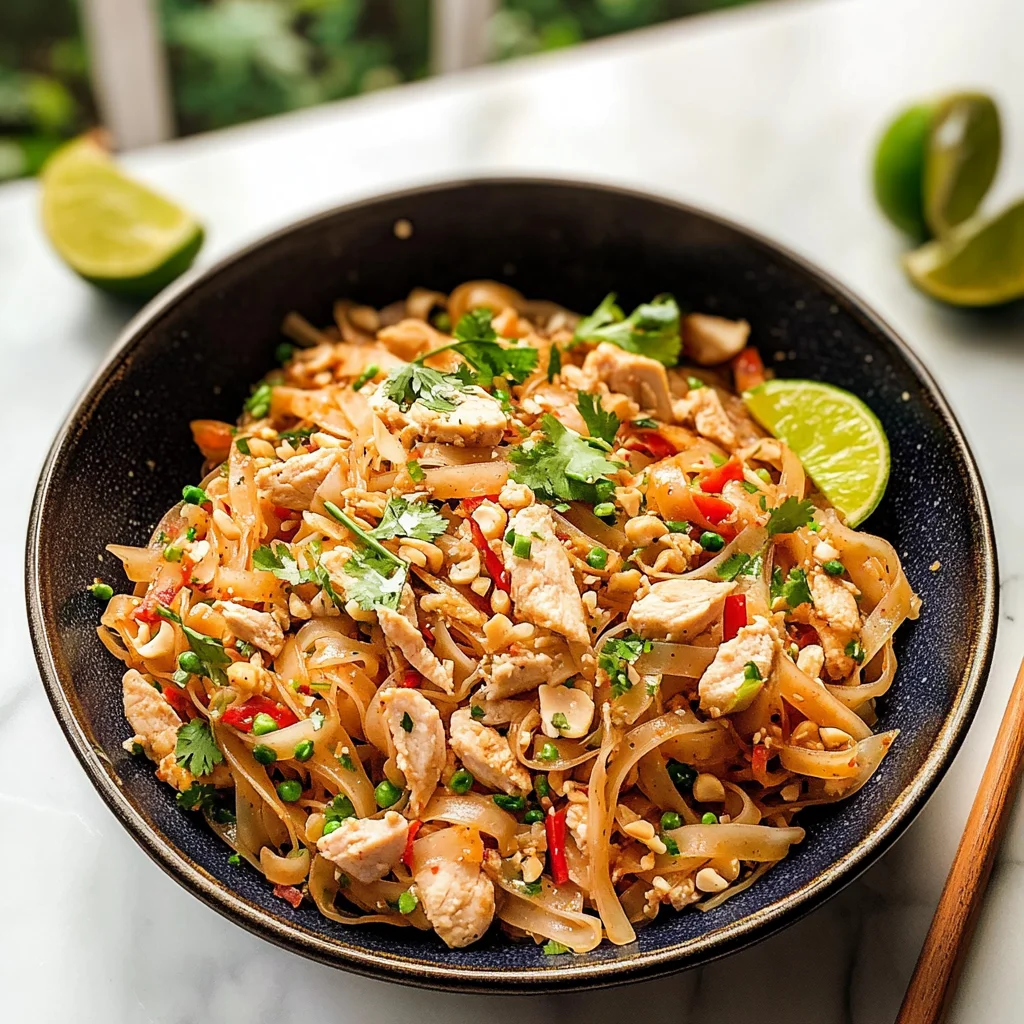
Perfect for weeknights when you’ve got 30 minutes and no clue what to cook, this version skips the fuss of soaking tamarind and instead uses a quick sauce that still packs flavor. (Trust me, it’s a lifesaver.) Plus, it’s ready before you can even figure out what to do with that leftover broccoli in your fridge. Dinner’s sorted!
Why You’ll Love This Chicken Pad Thai
- Super Easy Prep: It comes together in under 30 minutes, making weeknight dinners a breeze (even for busy folks).
- Bold Flavors: The combo of fish sauce and tamarind gives it that sticky-sweet tang you just can’t resist.
- Crisp-Tender Veggies: With fresh bean sprouts tossed in, the crunch adds a nice contrast to the noodles and chicken.
- Endless Customization: You can swap in shrimp or tofu if you’re feeling adventurous, but don’t skip the fish sauce!
- One-Bowl Wonder: Just know it doesn’t store great — the noodles get kinda mushy after day one, but it’s so good fresh!
Chicken Pad Thai Ingredients
For the Base:
rice noodles (8 ounces) — Soak rice noodles in cold water, or they’ll clump up instead of cooking evenly.
vegetable oil (1 tablespoon) — Use high smoke point vegetable oil like canola, or you’ll get a burnt taste.
chicken breast (1 cup) — Don’t even think about using thighs; chicken breast keeps it classic and lean.
garlic (2 cloves) — Mince garlic fine, or you’ll end up with big, bitter chunks in your dish.
eggs (2 large) — Scramble eggs until just set, or they’ll turn rubbery and ruin the texture.
bean sprouts (1 cup) — Add bean sprouts at the end, or they’ll lose their crunch and freshness.
sliced (2 green onions) — Slice your veggies thin, or they won’t cook through and you’ll have raw bites.
For the Sauce:
fish sauce (3 tablespoons) — Use only premium fish sauce like Red Boat, or you’ll miss the umami punch.
tamarind paste (2 tablespoons) — Don’t swap tamarind paste for anything else; it’s got that unique tang you need.
sugar (1 tablespoon) — Use brown sugar for depth, or your dish will taste flat and one-dimensional.
soy sauce (1 tablespoon) — Go for low-sodium soy sauce, or it’ll overpower everything with saltiness.
Sriracha (1 teaspoon) — Add Sriracha to taste, or your Pad Thai will lack that kick it needs.
For the Topping:
crushed peanuts (1/4 cup) — Top with crushed peanuts, or you’ll miss that crunchy contrast and flavor.
fresh cilantro (1/4 cup) — Use fresh cilantro, or your dish will taste like it’s missing a key ingredient.
Full measurements in the recipe card below.
How to Make Chicken Pad Thai
1. Heat the Oil: Heat 1 tablespoon of vegetable oil in a large skillet or wok over medium-high heat until it shimmers. This’ll take about a minute.
2. Cook the Chicken: Add 1 cup of sliced chicken breast and stir-fry for about 5-7 minutes, until it’s cooked through and no longer pink (the edges should start to brown).
3. Add Garlic: Toss in 2 minced cloves of garlic and stir-fry for another minute, just until you can smell that delicious garlicky goodness.
4. For the Sauce: In a bowl, whisk together 3 tablespoons of fish sauce, 2 tablespoons of tamarind paste, 1 tablespoon of brown sugar, 1 tablespoon of low-sodium soy sauce, and 1 teaspoon of Sriracha. Pour this mixture into the skillet and stir to combine everything well.
5. Scramble Eggs: Push the chicken mixture to one side and pour in 2 beaten eggs on the empty side. Scramble them gently until just set — don’t overdo it or they’ll get rubbery!
6. Combine Everything: Now, add the soaked rice noodles (8 ounces) and 1 cup of bean sprouts to the skillet. Toss everything together for about 2-3 minutes until heated through (you’ll see steam rising).
7. Garnish & Serve: Remove from heat and garnish with sliced green onions, crushed peanuts, and fresh cilantro before serving immediately with lime wedges on the side.
Exact quantities in the recipe card below.
How to Store Chicken Pad Thai
- Room Temperature: Don’t leave it out for more than 2 hours; use an airtight container to keep it fresh-ish.
- Refrigerator: Store in a sealed container for up to 3 days. Just a heads-up — the noodles can get a bit soggy after a day or so.
- Freezer: It can go in an airtight freezer bag for about 1 month. But honestly, the texture of the noodles won’t be as nice once thawed.
- Reheating: Heat it in a skillet over medium heat until everything’s warmed through and you hear that sizzle again (about 5-7 minutes). A splash of water helps bring some life back!
What to Serve with Chicken Pad Thai?
It’s got a rich, sticky-sweet flavor that can weigh you down, so adding something light or crunchy balances it out perfectly.
- Crisp Cucumber Salad: Fresh crunch and coolness provide a refreshing contrast to the warm dish. (Just slice cucumbers and toss with rice vinegar.)
- Lime Wedges: A squeeze of lime adds acidity that cuts through the richness, brightening every bite.
- Thai Spring Rolls: Their light, crunchy texture complements the softness of this dish. (You can buy them pre-made for quick prep!)
- Mango Sticky Rice: The sweetness and creaminess create a delightful contrast without overwhelming your taste buds.
- Chili Garlic Edamame: A sprinkle of spice gives a nice kick and enhances the overall flavor profile.
- Pickled Vegetables: The tartness from pickles helps balance flavors while adding a pop of color on your plate. (Quick-pickle radishes in vinegar for 30 minutes!)
- Sesame Roasted Broccoli: The nutty crunch pairs nicely with it, creating a satisfying texture difference.
I’d definitely recommend trying these sides next time you whip up this meal!
Chicken Pad Thai Variations
Here’s how to play with this recipe and make it your own!
- Extra Veggies: Toss in 1 cup of sliced bell peppers or carrots when stir-frying the chicken for a colorful crunch.
- Peanut Butter Twist: Stir in 2 tablespoons of creamy peanut butter with the sauce for a nutty depth.
- Lime Zing: Squeeze fresh lime juice over everything right before serving for a bright, zesty finish.
- Cilantro Burst: Add 1/4 cup chopped cilantro during the final toss for a fresh herbaceous kick.
- Spicy Upgrade: Mix in 1 tablespoon of Sriracha with the sauce for an extra heat level — bring it on!
- Egg Free Option: Skip the eggs entirely if you’re looking to lighten things up; it still works great without them.
- Meat Swap: Replace chicken with shrimp (same amount) during the stir-fry step for a seafood twist.
Make Ahead Options for Chicken Pad Thai
I usually prep the sauce a day ahead — it holds up great for about three days in an airtight container. I also slice the chicken and soak the rice noodles in hot water, so they’re ready to go when I am. Just store everything separately in the fridge. When I’m ready to serve, I stir-fry the chicken and garlic, scramble the eggs, then toss everything together right before serving. Honestly, the bean sprouts don’t keep well after they’re cooked; they lose that crisp-tender crunch, so I recommend adding them fresh at the last minute. Trust me on this: do your best to enjoy it right away!
Chicken Pad Thai Recipe FAQs
Can I make Chicken Pad Thai ahead of time?
You can prep some parts ahead, like soaking the rice noodles and chopping veggies. But I wouldn’t recommend fully cooking this dish beforehand, since it tastes best fresh. If you need to reheat, do it gently in a skillet with a splash of water to keep things from drying out. (Trust me, soggy noodles aren’t the vibe.)
What can I substitute for tamarind paste in this recipe?
Honestly, don’t swap tamarind paste for anything else! It’s got that unique tang that makes this dish sing. If you absolutely can’t find it, a mix of lime juice and brown sugar could work in a pinch, but it’s not the same. Just know that your Chicken Pad Thai won’t have the authentic flavor without it.
Why did my Chicken Pad Thai turn out sticky?
If your dish ended up pan-sticky, it’s likely because the noodles weren’t soaked properly or cooked too long. Always soak them in hot water first; it’ll help them separate better when you stir-fry. Also, be sure to toss everything well with the sauce — you want every bite coated but not glued together!
How do I know when to add the bean sprouts?
Add those crunchy bean sprouts at the end of cooking! They only need about 2-3 minutes to heat through; any longer and they lose that crisp-tender texture we love. When you see steam rising and they’re just warming up but still crunchy, that’s your cue to mix everything together before serving!
Final Thoughts on Chicken Pad Thai
Honestly, the real magic of Chicken Pad Thai is how quickly it comes together, especially on a busy weeknight. With just a handful of ingredients and a little stir-frying action, you’ll have dinner ready in about 30 minutes. And that flavor? Totally worth the effort! If you’ve been putting this off, tonight’s the night. I promise you’ll want to make it again and again. Let me know how yours turned out in the comments!
Chicken Pad Thai
Ingredients
Method
- Heat the vegetable oil in a large skillet or wok over medium-high heat.
- Add the sliced chicken and stir-fry until cooked through, about 5-7 minutes.
- Add minced garlic and continue to stir-fry for another minute.
- Pour in the sauce mixture (fish sauce, tamarind paste, sugar, soy sauce, and Sriracha) and stir to combine.
- Push the chicken mixture to one side of the skillet.
- Pour the beaten eggs into the empty side and scramble them until just set.
- Add the soaked rice noodles and bean sprouts to the skillet, tossing everything together to coat in the sauce.
- Cook for an additional 2-3 minutes until heated through.
- Remove from heat and garnish with sliced green onions, crushed peanuts, and fresh cilantro.
- Serve immediately with lime wedges on the side.